
The Sensex opened with a positive gap of 63 points at 15,896, but soon slipped into red owing to nervousness in the markets. The Sensex finally ended with a significant loss of 489 points at 15,343. The NSE Nifty dropped 125 points to close at 4,647. BHEL and HDFC, L&T and M&M, ICICI Bank, Maruti and Reliance, HDFC Bank, DLF, Reliance Communications and Infosys, Cipla, Tata Motors and NTPC were major losers. Ambuja Cements, Reliance Energy, SBI and TCS too were losers.

In December 2014, it was (-)0.50 per cent.

With inflation turning positive after 13 weeks, the Reserve Bank on Thursday said the wholesale price index may rise to six per cent by this fiscal end a development that may pose challenges to the central bank in maintaining a stable monetary policy.

The RBI has targeted 6 percent inflation by January 2016

The WPI inflation currently is ruling around 8.6 per cent. He said the duties like 5 per cent import duty on crude oil was abolished when international crude price touched a record high of $147 a barrel.
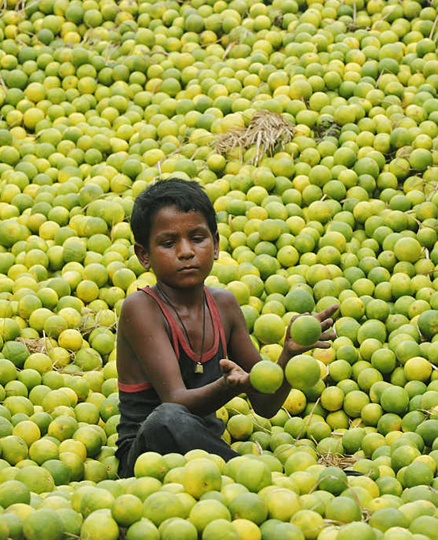
In October, CPI inflation was 5 per cent.

Prices of food articles contracted by 3.47 per cent in June on a yearly basis. Vegetable inflation stood at (-)21.16 per cent.
Wholesale fuel prices in May fell 10.51 per cent year-on-year.

Mahindra & Mahindra was the top laggard in the Sensex pack, sliding 2.05 per cent, followed by Bajaj Finance, Tata Steel, SBI, Asian Paints, Kotak Mahindra Bank and Titan. However, IT majors HCL Technologies and TCS defied the trend and gained 1.02 per cent and 0.47 per cent, respectively. FMCG firm Hindustan Unilever rose 0.32 per cent.

With the advancement of the base year and probably a revision of commodities in the index and their weights, it is expected that the index would provide a better picture of the current scenario of prices. The finance minister said information on weekly prices of manufactured products is highly meagre.
The price rise in individual key food commodities over the last one year is significantly higher than what is conveyed by the wholesale price index. While the latest government data show inflation at 6.68 per cent for the week ended March 15, the price change in most food items is in double digits.

Inflation dipped to a five-month low of 5.19 per cent in July mainly on account of decline in prices of some food articles, vegetables and protein rich items.

All investors should ideally have a 10 to 15 per cent allocation to gold. Whether they invest in gold ETFs or SGBs should depend on their investment horizon.

Inflation in food articles inched up to 0.69 per cent in September.
Inflation at 6 per cent was a matter of concern in the evolving macro-economic outlook and the Reserve Bank of India fears that consumer prices could be even higher at 7 to 8 per cent.

Finance Minister Nirmala Sitharaman on Wednesday said the government is keeping an eye on inflation which is purely "extraneous" nowadays because of fuel and fertiliser prices. Replying to the debat on the Supplementary Demands for Grants in the Rajya Sabha, the minister said wholesale inflation has fallen to a 21-month low. Later, the Rajya Sabha returned the Supplementary Demands for Grants to the Lok Sabha, thus completing the process of authorising the government to spend an additional Rs 3.25 lakh crore in FY2022-23.
Inflation indexed bonds assure a positive return over inflation.

The ministry sought to allay the rating agency's concerns and said economic growth was on an upward swing.
.jpg)
As on Monday, the prices of many vegetables had fallen as much as 50% compared with those a month before, due to increased supply, following the arrival of winter crops in the markets.
Manufactured goods and food lead the price rise.

Quarterly earnings from IT majors Tata Consultancy Services (TCS), Infosys, macroeconomic data announcements, global trends and trading activity of foreign investors would guide the movement in the equity market this week, analysts said. Movement of global oil benchmark Brent crude and the rupee will also influence trading in the markets. "All eyes will be on the beginning of corporate performance for the second quarter of the current fiscal year. TCS is slated to unveil its Q2 results on October 11, with HCL Technologies and Infosys following suit on October 12.

Wall Street brokerage Bank of America Securities has pencilled in lower than the consensus retail inflation for the current fiscal year at 5 per cent, but higher than the previous forecast of 4.7 per cent. Stating that the June print will be critical for the future trajectory -- after the extremely high 6.3 per cent print in May, the brokerage in a report on Friday revised upwards its forecast by 30 bps to an yearly average of 5 per cent for the year to March 2022. "Though the June print will be critical for future trajectory, beyond near-term, we find some comfort from our analysis of four key factors that are likely to influence CPI inflation the most.
"The increase in minimum support price of many crops may keep the food inflation from falling in the current year," said the finance ministry in the mid-year review. MSP, which is determined by the government to protect the farmers' earnings, has increased by 15-40 per cent in the current fiscal for three major categories -- wheat, paddy and coarse grains. The latest hike in MSP announced during this election year is the largest in the last four years.

The rupee sank below 60 rupees to the dollar and government bonds had their biggest single-day fall in a month on Monday as higher-than-expected May inflation compounded worries about the impact of violence in Iraq on the price of oil, which India imports.

Finance minister Nirmala Sitharaman on Wednesday exuded confidence that inflation would further decline and the government is on track to meet its budgetary target for deficit and said that there is no fear of stagflation in India. Replying to the debate on first batch of Supplementary Demands for Grants 2022-23 in Lok Sabha, the finance minister said inflation has come down and it is now in the tolerable band of the RBI. Inflation has been declining since April 2022 and it is declining further, she said.

American brokerage BofA Securities on Friday said the Indian economy continues to be "weak", pointing to activity indicators tracked by it. On the positive side, the brokerage said credit demand is bottoming out and the real lending rates adjusted for wholesale price inflation are falling. It can be noted that there has been a slew of reports lately about a stronger recovery being underway after the jolt caused by the pandemic.

Inflation moderates, but a rate cut is unlikely.

Mahindra & Mahindra was the biggest gainer on the Sensex chart, rising 2.56 per cent, followed by Tata Steel, Tech Mahindra, Nestle, Power Grid, Infosys, HCL Technologies, Axis Bank, UltraTech Cement and L&T. In contrast, Asian Paints, ITC, Bajaj Finserv, Bharti Airtel and Tata Motors were among the laggards.
Inflation rate in fuel and power segment was (-)16.50 per cent.

According to the report, going forward, inflationary pressures in some items may increase due to slight improvement in demand.

CPI inflation is on the decline since July.

Clouding the inflation outlook is the recommendation of the 7th pay panel for an average 24 per cent pay hike for millions of its employees, which would lift demand-driven price pressures.

Industrial output had slowed to 5-month low of 2.1% in March.
Rangarajan, who was answering questions on onion prices touching Rs 100 per kg in some cities, said the impact on inflation would not last long.

After a delayed start, the monsoon is advancing steadily.

The party said its government has taken a number of initiatives since its formation including tough action against hoarders and limiting export prices of essential commodities like onion, rice and wheat.
Industry experts insist that rising steel prices are triggered by rising input cost like scrap, iron ore and coking coal. The current international pricing scenario demands a prices increase domestically. The rising raw material costs and other available inputs as well as limited capex resources have driven the steel prices. The government has been taking steps to control prices by increasing the export duties on some commodities and even banning exports on some.
Deflation masked the rise in food inflation to a 5-month high.
 © 2026 Rediff.com - Advertise with us - Disclaimer - Privacy Policy - Sitemap - Feedback - About us - Terms of use - Grievances